Gay Pride Flag Make America Gay Again Flag
While about of us are now familiar with the famous LGBT rainbow flag representing queer pride, many of u.s.a. are not aware that it is different from the original rainbow Gay Pride Flag designed by Gilbert Baker. Nor that there are now more inclusive versions that specifically recognize the trans, intersex, and POCs in our various community.
And when nosotros are talking about the dissimilar LGBTQ Flags and their meanings, there is far more than only this one flag.
In fact, there are now over l flags recognized amid the LGBTQ+ community, each used to symbolize different gender identities and sexual orientations within. While most queer individuals would too identify with the extensive rainbow flag, many desire to have their own individual flag.
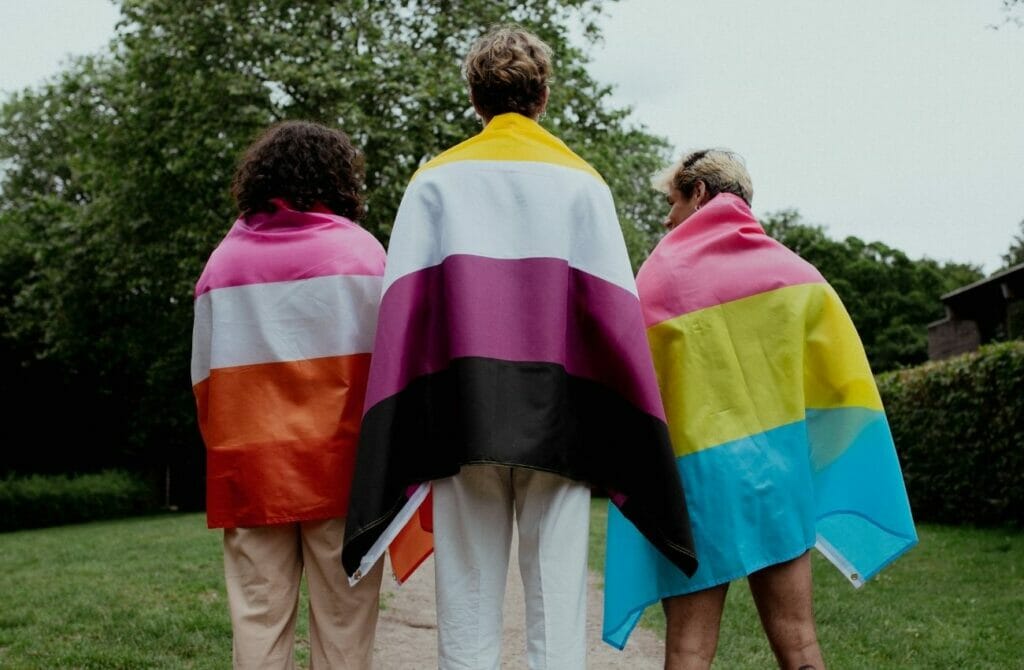
Imagine the rainbow flag is the United states of america flag, and many of these other flags are like individual states underneath. In a community as large and beautifully diverse as ours, it is natural that smaller tribes will desire to carve out some recognition for themselves; thus, the unlike LGBTQ Flags nosotros have today.
As Gilbert Baker, the original creator of the showtime rainbow Gay Pride Flag, said, "Flags say something. You lot put a rainbow flag on your windshield, and you lot're proverb something."
And so, what exercise these unlike LGBTQ Flags say? Well, we take rounded them up and tried our best to explain the significant behind them all. There is some contention of meaning, or information technology has been lost to fourth dimension – simply our explanations should yet help requite some context.
So, permit united states introduce the different LGBTQ Flags and their meanings…
In this commodity we will cover...
- Abrosexual Pride Flag
- Agender Pride Flag
- Androgyne Pride Flag
- Aromantic Pride Flag
- Asexual Pride Flag
- Bigender Pride Flag
- Bisexual Pride Flag
- Butch Lesbian Flag
- Demiboy Pride Flag
- Demigender Pride Flag
- Demigirl Pride Flag
- Demisexual Pride Flag
- Drag Plumage Pride Flag
- Drag Pride Flag
- Gay Bear Brotherhood Pride Flag
- Gay Leather Pride Flag
- Gay Men's Pride Flag
- Genderfluid Pride Flag
- Genderflux Pride Flag
- Genderqueer Pride Flag
- Graysexual Pride Flag
- Hijra Flag
- Intersex Pride Flag
- LGBT Rainbow Pride Flag
- LGBT Progress Pride Flag
- LGBT Progress Pride (Intersex- Inclusive) Flag
- Labrys Lesbian Pride Flag
- Lesbian Pride Flag
- Lipstick Lesbian Pride Flag
- Maverique Pride Flag
- Neutrois Pride Flag
- Not-Binary Pride Flag
- Omnisexual Pride Flag
- Original Gilbert Bakery Rainbow Pride Flag
- Pangender Pride Flag
- Pansexual Pride Flag
- Philadelphia Pride Flag
- Polyamory Pride Flag
- Polysexual Pride Flag
- Puppy Pride Flag
- Queer Pride Flag
- Questioning Pride Flag
- Rubber Pride Flag
- Straight Ally Pride Flag
- Transgender Pride Flag
- Trigender Pride Flag
- Twink Pride Flag
- Two-Spirit Pride Flag
- Other Popular LGBTQ Flags
- Born This Fashion Pride Flag
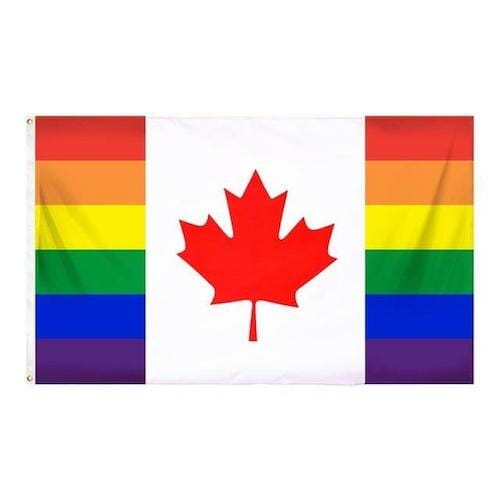
- Canada Gay Pride Flag
- Equal Human Rights Pride Flag
- Equality for Everyone Pride Flag
- Gay Pride Peace Flag
- Man LGBT Pride Flag
- Kindness Is Everything Pride Flag
- LGBT Pride Flag
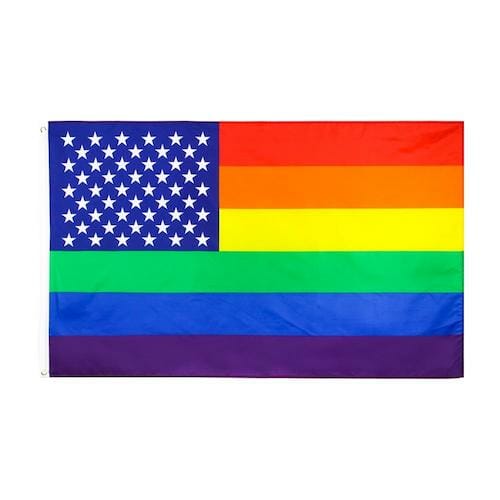
- United states Gay Pride Flag
Abrosexual Pride Flag
An abrosexual person has a fluid sexual orientation and may experience different sexual orientations over time. They may exist one sexuality today and be another tomorrow. The timeframe to change an abrosexual individuals' sexual orientation doesn't matter, and information technology could be hours or years before they identify as different sexuality.
The abrosexual flag was created past Modernistic Republic of chad of pride flags-for-us after an anonymous Tumblr user requested it. Information technology is also idea that the flag and the term originated on DeviantArt in 2013 and later gained recognition on Tumblr.
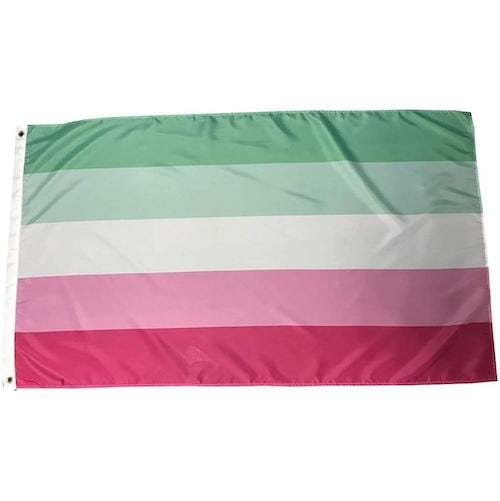
The abrosexual flag is made up of five colors. There's dark greenish, light green, white, infant pinkish, and rich pink from top to lesser. It isn't known why these colors were specifically chosen for the abrosexual flag. I Tumblr user on the page abrosexual learning shared their interpretation of what the flag's colors mean.
They said, "Green represents a queer attraction, the fade to white is for the in-between stage of attraction shifting, and pink is for the actual shift itself. Too, the colors friction match that of watermelon, which could exist a fun pun on the /fluidity/ of our orientation."
Agender Pride Flag
Agender refers to a person who does not place themselves as having a particular gender. Other words used to depict agender include genderfree, neutrois, gender blank, or genderless.
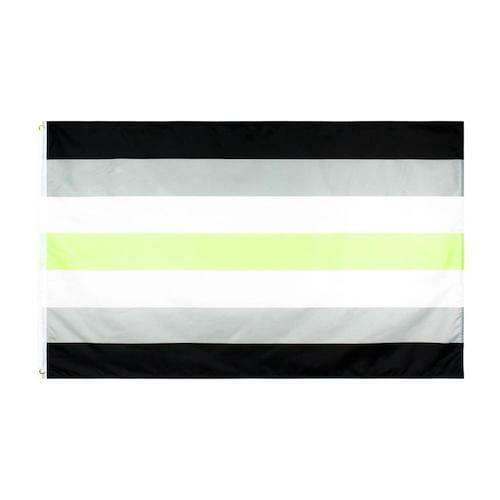
The agender pride flag was created in 2014 by Salem X. It has vii equal-sized horizontal stripes. The stripes are colored blackness, gray, and white, with a primal green one, then the opposite white, gray, and blackness to finish.
The agender flag has four colors. Here'south what they all mean:
- Black and white stripes represent a lack of gender
- Gray represents semi-genderless
- Light-green represents nonbinary genders.
Androgyne Pride Flag
An androgynous person is someone who displays a combination of masculine and feminine characteristics into an ambiguous class. Androgyny may exist stated with respect to biological sex, gender identity, and/or gender expression.
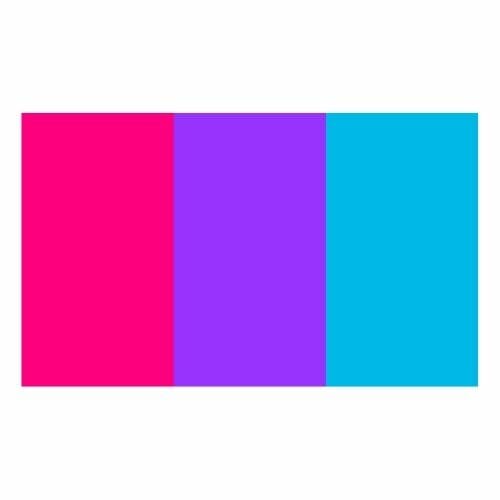
The androgyne flag includes three vertical stripes, and on July 24th, 2014, Tumblr user saveferris fabricated the flag. In that location are 3 colors on the flag:
- Pink which represents femininity and womanhood.
- Blueish which represents masculinity and manhood.
- Purple which represents androgyny, which is a combination of the ii colors.
Aromantic Pride Flag
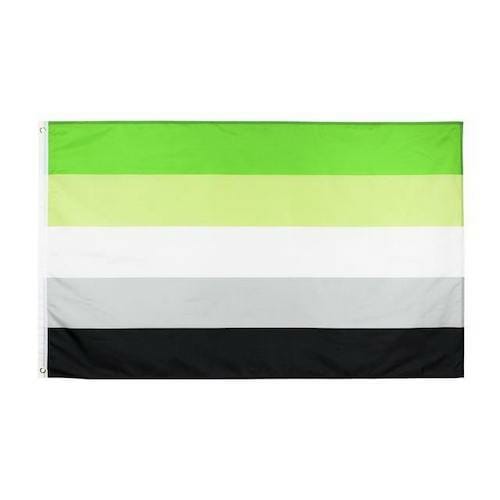
Aromantics accept no interest in or desire for romantic relationships and take been represented by iii flags in the past few years. The showtime one had iv stripes with orange, greenish, black, and yellow. On this flag, light-green is the opposite of romance, yellow is for friendship, orange is for aromantics, and black is for alloromantics who don't subscribe to the traditional boundaries of romance.
It isn't known who created this flag or when.
The next aromantic pride flag had 5 stripes. The colors were black, grey, yellow, light green, and night green. Like many LGBTQ flags, this one was starting time created on Tumblr (in 2014 past user Cameron). The third blueprint is the virtually recent one and is currently the most widely used and accepted version of the aromantic pride flag. Cameron besides designed this flag on November 16th, 2014.
The aromantic flag has four colors. Here's what they all mean:
- Dark greenish represents aromanticism.
- Light light-green represents the aromantic spectrum.
- White represents aesthetic attraction and queer/quasi platonic relationships.
- Gray represents demiromantic and gray-aromantic people.
- Blackness represents the sexuality spectrum.
Asexual Pride Flag
An asexual person is someone who has no sexual feelings or desires or who is not sexually attracted to anyone.
Asexual visibility and education network (AVEN) user standup designed the asexuality flag in 2010. It was chosen every bit the result of a month-long competition on the message boards to find an ace flag. The motion to create a flag traversed multiple threads and had three distinct polling stages.
In an endeavor to incorporate aces outside the forum, polling in the final vote was expanded to other ace communities, including not-English forums. This was a successful motion as it is now widely used around the world.
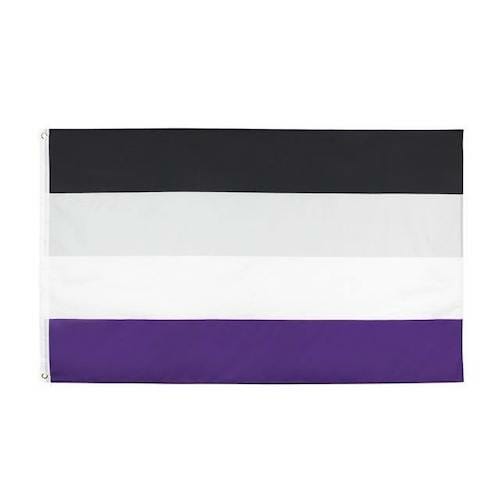
The asexual pride flag is a uncomplicated four-bar design that cleverly avoids references to special symbols like hearts or triangles. The asexuality flag also doesn't reference whatever nation and fits with the designs of other Gender and Sexual Minority (GSM) community pride flags.
The asexuality flag has four colors. Hither'southward what they all hateful:
- Majestic represents community.
- White represents non- asexual allies and partners.
- Grey represents demisexuality and grey-asexuality.
- Blackness represents asexuality.
Bigender Pride Flag
A bigender person is some whose sense of personal identity encompasses ii genders. Information technology literally translates as '2 genders' or 'double gender,' and these genders could be male and female simply could also combine not-binary identities.
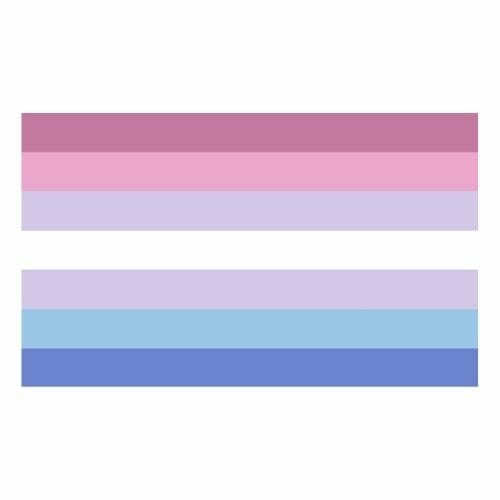
There are many widely used bigender flags – more than about LGBTQ+ identities – which is largely due to accusations around transphobia (among other things) of the original flag creator. We will discuss the second most common bigender flag, past army camp-MLM, just if yous are planning to wing ane or get i equally a gift for a friend, you might want to investigate the numerous alternatives. It has seven stripes, and the colors are thought to mean:
- Pinkish/blueish stripes are for presentation and the feeling of your identities (feminine, masculine, androgynous, whatever suits you).
- The peak purple is for all kinds of good relationships.
- The white is for your unique bigender experience, how information technology feels and what it'due south like. Information technology's also for understanding each other in this customs!
- The bottom purple is nigh self-respect, pride, and being true to yourself.
Bisexual Pride Flag
A bisexual person is someone who is sexually attracted to both men and women. Bisexuality may also be interpreted as a person with romantic or sexual attraction to people regardless of their sexual activity or gender identity, how this is known more than specifically every bit pansexuality.
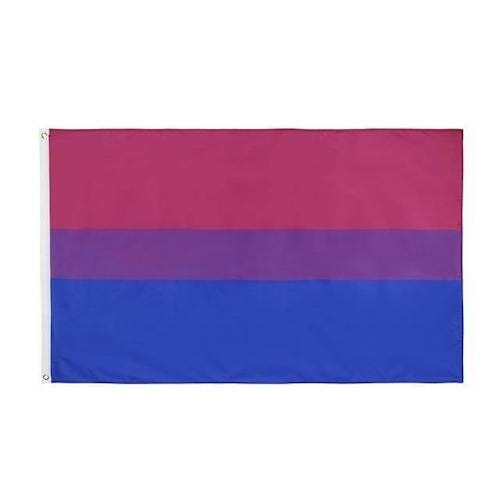
Michael Page designed the bisexual pride flag in 1998 to give the bisexual customs a symbol that was comparable to the gay pride rainbow flag. He aimed to increment visibility towards the bisexual community, considering bi-erasure is a existent thing – and is arguable just as big a problem then every bit it is now.
The bisexual flag has three colors. Hither's what they all mean:
- Pink represents same-gender attraction.
- Blue represents sexual attraction to the reverse gender. In the instance of non-binary genders, it refers to sexual attraction to a different gender.
- Royal (the overlap between pink and bluish) represents sexual attraction to two or more genders.
Butch Lesbian Flag
In lesbian civilization, the word 'butch' indicates a woman whose gender expression and traits present equally typically 'masculine'. Being butch is about playing with and questioning traditional binary male person and female gender roles and expressions.
Tumbler user Dorian—rutherford produced the first butch lesbian pride flag in 2016 using shades of blues and purple. The flag was created for lesbians who do not identify with the lipstick lesbian flag, which has strong feminine overtones. The original tumbler postal service was removed; yet, it after reappeared on deviantart.com.
Butchspace, a tumbler user, devised a new form of the butch flag in 2017 to symbolize butch pride using shades of orange. Both butch lesbian flag versions are still gaining popularity in the customs – and much like the lesbian pride flags, there is no clear preferred selection.
People accept speculated that the bluish signifies masculinity, the regal represents lesbian and woman-identified folks, and the white represents people beyond the gender and sexuality spectrums more widely, despite the fact that the artist never clearly stated the significance of the colors. A similar explanation and problem exist for the orange butch flag.
Equally both butch lesbian flags are in most equal use, we merely propose flight the version that you most like.
Demiboy Pride Flag
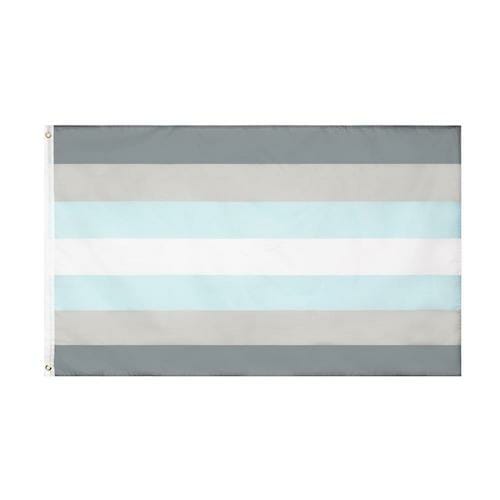
A demiboy (sometimes known as a demiguy, demiman, demimale, or demidude person) is a person who identifies with aspects of masculinity—regardless of their sex assigned at birth.
Tumblr user Transrants designed the demiboy flag in 2015. However, he didn't explicitly explicate the meaning behind the flag. However, since then, the community has lovingly adopted this flag, and the demiboys who at present identify with it have assigned some meaning to it.
The demiboy flag has three colors. Here's what they are thought to mean:
- Blue represents manhood or masculinity.
- White represents non-binary or agender identities.
- Grey represents the greyness areas and fractional connections and the possibility of more genders rather than the ii on the binary spectrum.
Demigender Pride Flag
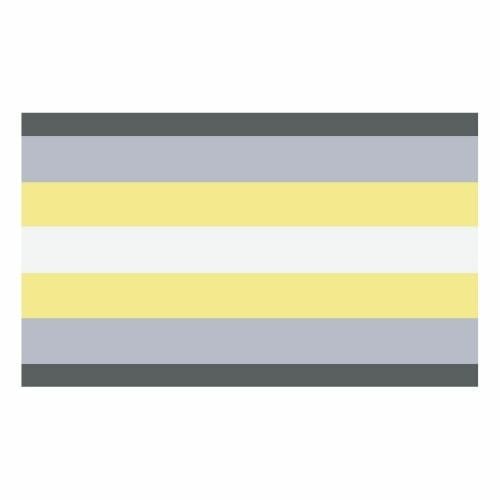
A demigender (from demi "half" + "gender") is an umbrella term for nonbinary gender identities and denotes individuals who feel only a partial connection to a detail gender identity. The term covers demiboy and demigirl, along with a variety of other demi-gender identities.
While many demigender individuals prefer to wing their specific flag, in that location is an overarching demigender pride flag with vii stripes and dark grey, light grey, light xanthous, white, light xanthous, calorie-free grey, and dark grey coloration.
The 'demi-flags' greys symbolize bitty connections and grey regions, while the yellow signifies not-binary gender identities and the white signifies agender identification.
Demigirl Pride Flag
A demigirl (sometimes known equally a demiwoman, demilady, or a demifemale person) is a person who identifies with aspects of femininity—regardless of their sexual activity assigned at birth.
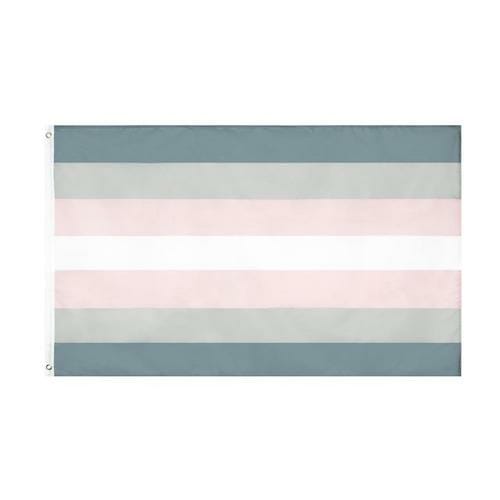
The demigirl flag was designed by Tumblr user Transrants in July 2015, and like the demiboy flag, there are no confirmed color meanings, but in that location are some common assumptions.
The demigirl pride flag is meant to represent gender neutrality, which is a massive gene in the experience of being a demigirl. It is intended to signify the feeling of questioning and shifting of gender.
The demigirl flag has 3 colors. Here's what they are thought to mean:
- Pink represents womanhood or femininity.
- White represents non-binary or agender identities.
- Gray represents the grey areas and fractional connections and the possibility of more genders rather than the two on the binary spectrum.
Demisexual Pride Flag
A demisexual is someone who just experiences sexual allure to people with whom they have close emotional connections. For demisexuals, sexual attraction can only come up subsequently an emotional bail has formed.
Sadly, like many LGBTQ+ flags invented in the internet era, information technology is unknown when or by who the demisexual flag was created, but we can assume it was created after the asexual pride flag (created in 2010) as it uses the aforementioned colors.
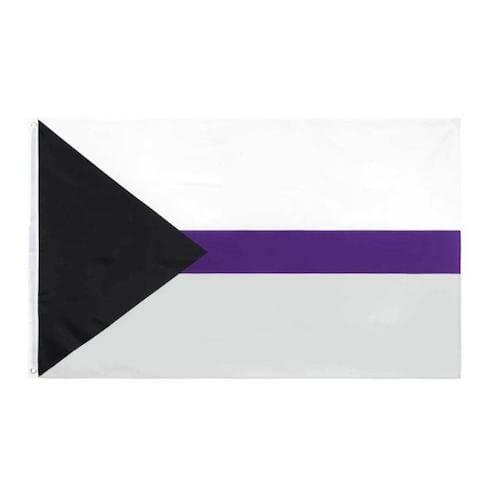
The demisexual pride flag has a blackness triangle coming out of its left side. It has a thick white line on the top, followed by a thin royal one in the middle, then a thick gray ane at the bottom.
The Demisexual flag is a symbol for those who are merely sexually attracted to those they accept a strong emotional connection to. The demisexual flag has three colors. Hither'due south what they all mean:
- Black represents asexuality.
- Gray represents demisexuality.
- White represents sexuality.
- Royal represents community.
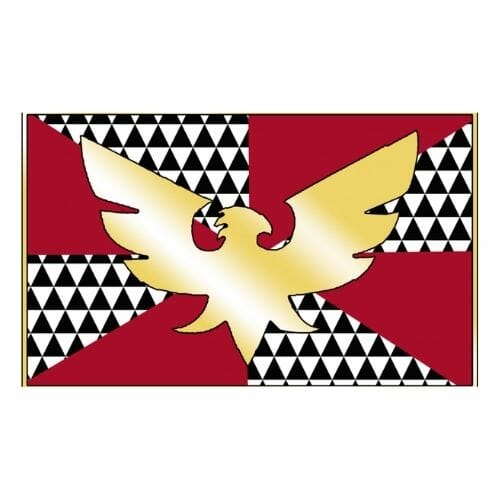
Elevate Feather Pride Flag
The term "drag" suggests a operation of masculinity, femininity, or other forms of gender expression. To 'do elevate' is to dress upward or exhibit yourself differently than your everyday expression, usually for performance. Common forms of drag are drag queens and drag kings.
In that location are 2 drag pride flags; nonetheless, many elevate entertainers are unaware of the earliest pride flag, which was created by artist Sean Campbell in 1999 and was called the Feather Pride Flag. It has a phoenix in its center which symbolizes rebirth and fires of passion with which the drag community exercises to heighten awareness and funds in their communities.
Drag Pride Flag
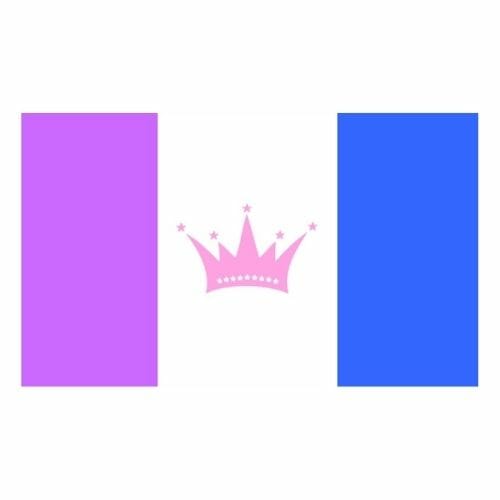
The second and at present more commonly used Elevate Pride flag resulted from the Austin International Drag Festival (AIDF) 2016. It has a crown and stars along with three vertical stripes. Thankfully nosotros also know what the drag pride flag colours hateful:
- Purple signifies a passion for drag.
- White signifies how 1'south body and face get a blank slate to alter and create characters on.
- Blue signifies self-expression and loyalty.
- The crown signifies leadership within the community.
- The stars signify the many forms of drag.
Gay Acquit Brotherhood Pride Flag
In gay civilisation, a bear is a larger and often hairier man who projects an image of rugged masculinity. Secondary sex attributes such as the growth of body hair and facial hair (which are typically considered "bear" characteristics) are celebrated in gay bear culture.
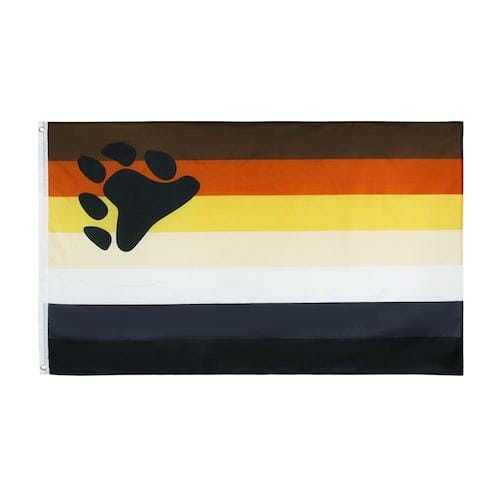
The International Bear Brotherhood Flag was created to represent the Alliance of Bears and was designed by Craig Byrnes in 1995. His undergraduate degree in psychology involved devising a senior project nigh the deport culture that had raged since the early 1980s, of which he had first-hand experience – and this flag results from this projection.
The flag'south colors are intended to represent the colors of animal carry furs from throughout the world, not necessarily human skin and pilus color tones. Nighttime dark-brown, orange/rust, golden xanthous, tan, white, grey, and black are some of the colors included on the flag – along with a bear paw print.
The flag was created with the thought of inclusivity in mind – as the bear community is one of the well-nigh inclusive queer tribes there are!
Gay Leather Pride Flag
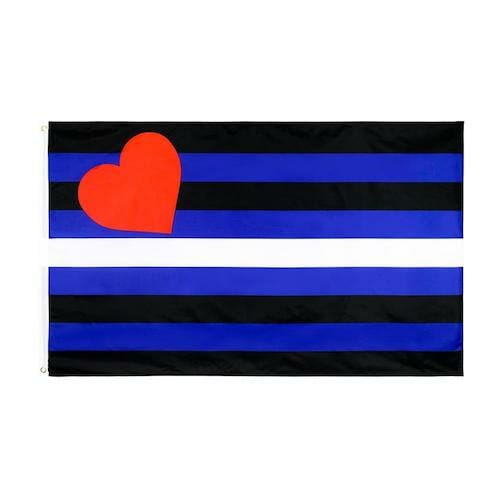
Since the 1990s, the leather subculture has utilized the leather pride flag equally a symbol. Tony DeBlase developed it, and the homosexual leather scene rapidly accustomed information technology. Since and so, it's been continued with leather in full general, too as allied communities similar the BDSM community.
On May 28th, 1989, he debuted the blueprint at International Mister Leather. The flag is fabricated up of nine equal-width horizontal stripes. The stripes modify between blackness and regal blue from top to lesser. White is the center stripe. A huge red eye appears in the upper left quadrant of the flag. His stated intention was to let the spectator decide how to translate the colors and symbols.
Despite its popularity in the gay leather scene, the flag is not merely a gay symbol; it symbolizes the whole leather community.
Gay Men's Pride Flag
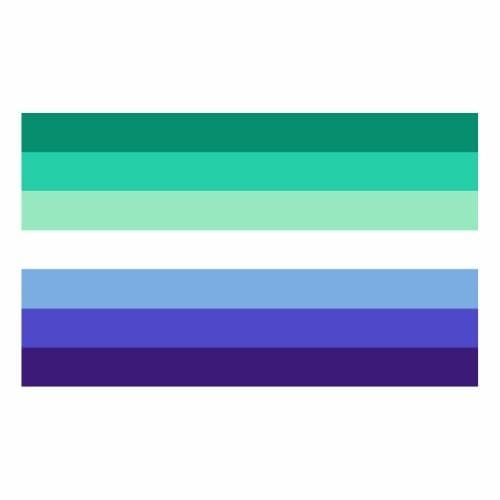
Another lesser-known pride flag is the gay men's pride flag. It comes in a diverseness of dark-green, bluish, and purple hues.
This mod gay men'southward pride flag is a reimagining of a previous gay men's pride flag with a variety of blue tones. Because it employed colors that were stereotypical of the gender binary, that edition was problematic This new flag includes a broader spectrum of LGBT men, including transgender, intersex, and gender-nonconforming males, among others.
Yet, it is fair to say that most gay men adopt to just use an iteration of the rainbow LGBTQ+ flag that is more representative of the unabridged queer customs.
Genderfluid Pride Flag
Simply put, a genderfluid person is someone who does not identify themselves as having a fixed gender.
Genderfluid people feel gender fluctuations over time. For some genderfluid individuals, gender changes are arbitrary, while for some, they're farthermost. Gender fluctuations may happen slowly over a menstruation of months or years, or they may happen fast in a matter of hours or days.
The Genderfluid Pride Flag was created in 2012 by JJ Poole(they/them), an agender pansexual from New York state who advocates for people who do not fit into heteronormative society. They designed information technology to encompass all gender identities, and equally such, the genderfluid flag has v horizontal stripes and 5 colors. The colors are:
- Pink for femininity.
- Blueish for masculinity.
- Purple for femininity and masculinity.
- Black for lack of gender.
- White for all genders.
In 2021, LGBTA wiki user FruitIndividual designed an alternate genderfluid flag that represented the fluidity and change experienced by persons with this identity in the wave pattern of lines. Information technology is quickly communicable on and may soon be the preferred genderfluid flag.
White symbolizes cryptic and/or non-binary identities, whereas lighter blue represents masculine identities, pinkish represents feminine identities, purple represents a combination of masculine and feminine identities, and royal represents a blend of masculine and feminine identities. The fluidity and change experienced by persons with this identity are represented by the moving ridge pattern of the lines.
Genderflux Pride Flag
Genderflux is a catch-all phrase for gender identities in which one'southward gender or sense of the intensity of one's gender changes over time. A person who is genderflux experiences a range of intensity within a gender identity.
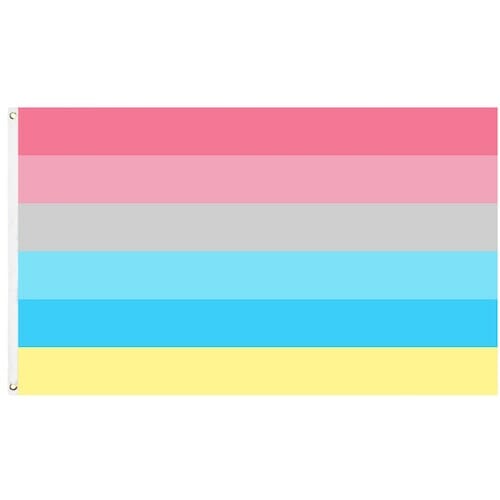
It is unknown who created the genderflux pride flag, and there are now three new versions; nonetheless, the original is most usually used. Information technology has six strips and 6 colors. The colors are thought to mean:
- Dark pink represents women.
- Light pink represents demigirls.
- Grey represents agender.
- Light blue represents demiboys.
- Dark bluish represents men.
- Yellowish represents non-binary genders.
Genderqueer Pride Flag
A genderqueer person does not subscribe to conventional gender distinctions but yet identifies with neither, both, or a combination of male and female genders. The term genderqueer is like to nonbinary, but has a slightly different meaning and is best considered an umbrella term to cover any identity that isn't cisgender.
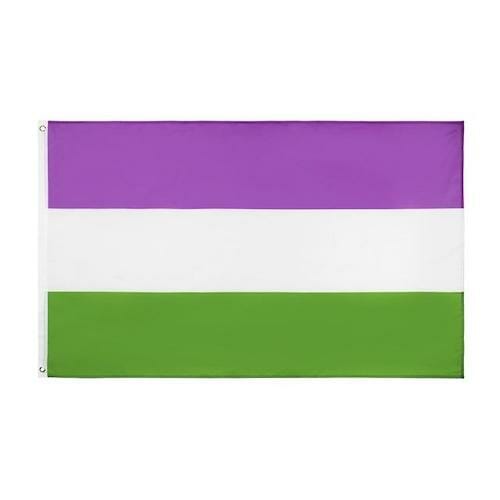
Marilyn Roxie, an advocate, and genderqueer writer, designed the genderqueer pride flag in 2011. The flag has 3 colors and iii stripes. Hither's what the colored stripes of the genderqueer flag mean:
- Lavender, created from a mix of pinkish and blue, which have traditionally stood for men and women, expresses queer identities and androgyny.
- White represents gender-neutral and agender identities.
- Chartreuse represents identities that aren't in the gender binary too equally the tertiary gender.
Graysexual Pride Flag
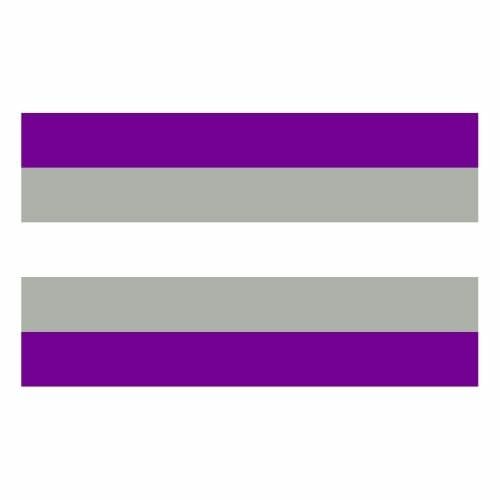
Graysexuality, also known every bit grey asexuality, gray-a, greyness-ace, or gray-ace, is a give-and-take used to describe persons who place as asexual merely do not fall into one of the primary kinds of asexuality. Typically it is a person who experiences express sexual allure.
Milith Rusignuolo devised the first greysexual flag, which was uploaded to Wikipedia on June 21st, 2013. It was intended to represent someone starting with no sexual attraction (majestic signifying asexuality), then going through a single episode of attraction (greyness to white) with white indicating allosexuality from the asexual flag, and then returning to asexuality.
Hijra Flag
In Republic of india, the hijra is a formalized third gender status. Equally worshippers of the Mother Goddess Bahuchara Mata, their divine abilities are dependent on their asexuality.
These identities practice not have a perfect analogue in the gender and sexual orientation taxonomy, and they provide a challenge to Western notions of sex and gender. In India, some Hijras describe themselves non by their sexual orientation but by their complete lack of sexuality and tell how sacred powers are created by transforming sexual free energy.
A person with the username HijrAnon produced the first known hijra flag in 2016. The symbolism of the flag was described by HijrAnon as follows:
- The pinkish background is meant to be ambiguous, looking like a pink or dark ruby-red depending on how you wait at information technology
- The head shape with one-half white and one-one-half greenish is meant to represent Ardhanarishvara (the white half is Lord Shiva, the green half is Parvati, the light dark-green eye is Ardhanarishvara themselves).
- The yellow band near their neck is meant to be a necklace. In Republic of india, necklaces are usually worn for protection and good luck – so in a style, they wanted this to represent protection for hijras.

Intersex Pride Flag
Intersex is a term that may be used to draw a person with both male and female sex characteristics at nascence. Many individuals built-in take several sex characteristics, including chromosome patterns, gonads, or genitals that, according to the Office of the United nations High Commissioner for Homo Rights, "do not fit typical binary notions of male person or female bodies."
It is estimated that around ane.7% of the population is built-in with intersex traits – analogous to the number of people born with red hair. Notwithstanding how common this is, the word intersex is still more often than not misunderstood, and intersex people are massively underrepresented.
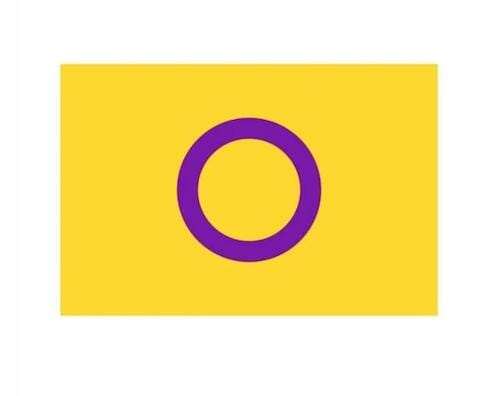
The well-nigh commonly used intersex pride flag is designed with a yellowish background and a purple circle at the center. In 2013 Morgan Carpenter of Intersex Human Rights Australia chose xanthous and purple to stand for the intersex flag because none of these colors represent the traditional constructs of binary identities (male and female).
The circumvolve is the intersex flag is also described past Morgan as "unbroken and unornamented, symbolizing wholeness and abyss, and our potentialities. Nosotros are still fighting for actual autonomy and genital integrity, and this symbolizes the right to be who and how we desire to be". It is non used, as often idea, to stand for the differences in sexual and gender identities that members of the customs experience.
Withal, information technology is of import to annotation that not all members of the intersex customs accept embraced this intersex flag. Some of them volition non identify with what it represents. As a upshot, there have been many changes to the intersex flag over the years, with many other flags existence used concurrently. However, this is the most widely recognized.
We simply love how the circle at the center of the intersex flag reminds us that intersex people are whole and that intersex people are perfect the way they cull to exist, regardless of pseudoscientific claims or social norms.
LGBT Rainbow Pride Flag
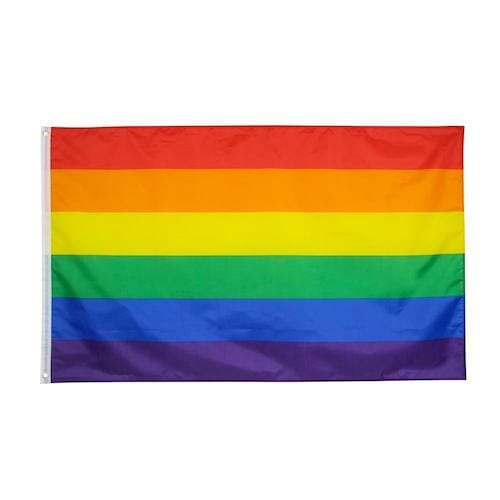
The LGBT rainbow flag represents lesbian, gay, bisexual, transgender, and queer (LGBT) and queer pride, too as LGBT social movements. The colors of the LGBT pride flag, also known as the gay pride flag or LGBT pride flag, depict the LGBT customs's multifariousness besides every bit the "spectrum" of human sexuality and gender.
Based on the original Gilbert Baker Pride Flag (but with ii fewer stripes), this is the about commonly seen LGBT flag in the world and is the virtually universally recognized.
The flag is about commonly flown horizontally, with the scarlet stripe on top, as in a real rainbow.
Rainbow flags, as well as a diversity of rainbow-themed merchandise and colour schemes, are at present used by LGBT people and supporters every bit an outward representation of their identification or support.
LGBT Progress Pride Flag
For the last 40+ years, the iconic LGBT Pride flag produced past Gilbert Bakery' with its half-dozen distinguished colors (red, orange, yellow, green, blue, and violet) has been the globally recognized symbol of the LGBT community.
But in the past few years, Pride festivals, companies, and activists worldwide have meantime and without any coordination been embracing 'The Progress Flag' equally their emblem for the queer community instead.
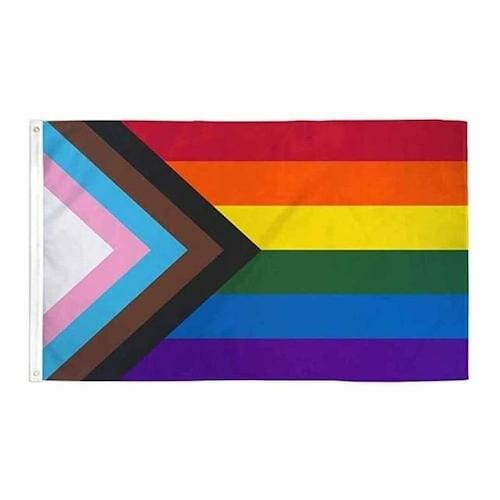
Created by Daniel Quasar in 2018, the Pride Progress Flag features blackness and brown stripes to portray marginalized LGBTQ+ communities of colour and babe bluish, pink and white to incorporate the trans flag in its design.
Daniel displaced the trans flag stripes and marginalized community stripes to the flag's hoist, where they form a new arrow shape. The arrow leads to the correct to confer forward motion while purposely being along the left edge, pointing to the fact that much progress nonetheless needs to be made.
From the London Mayor'south role to Fort Lauderdale Pride and various cultural institutions worldwide–the symbol being used to serve LGBT people is evolving. And it's all role of a journeying to be more inclusive of the expansive latitude of identities inside our community.
The intention backside this change is not to replace or erase what the Pride flag was, but rather to recognize the value of all parts of our modern queer customs, which the Progress flag does a better job of.
And considering the current Blackness Lives Matter movement and specifically the focus on issues faced by queer trans people of colour (QTPOC) with our community – this shift towards the use of the more inclusive Pride Progress symbol is i should all fully back up and encourage.
Hopefully, in doing so, nosotros can start or proceed a conversation non only about trans and POC representation inside our community–but most bisexual, pansexual, and asexual people. And the progress that is yet to come for the fabulous area of gender identities, romantic and sexual orientations we don't talk about enough however.
The significance behind the Pride Progresses flag's design is an excellent encapsulation of where the LGBT community stands. We are a customs that has, and is, making exceptional progress. And yet, nosotros nonetheless take so much more to practice!
LGBT Progress Pride (Intersex- Inclusive) Flag
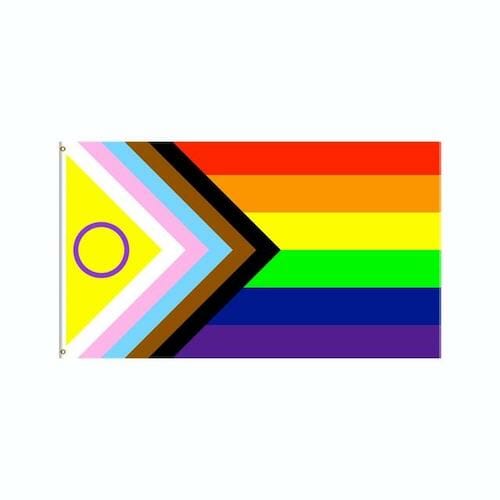
The ever-changing Pride symbol has been revised again, and in 2021 designed by Daniel Quasar was updated to exist fifty-fifty more inclusive – specifically of the intersex community.
The latest version was created by intersex journalist and media figure Valentino Vecchietti. Intersex Equality Rights UK, an advocacy group, unveiled the flag in belatedly May of 2021, and information technology has since gone viral on social media.
In Vecchietti'south version, a royal circle overlaid over a yellow triangle has been added to the chevron on the left side of Quasar's design, a nod to Australian Morgan Carpenter'due south famous 2013 intersex flag.
Labrys Lesbian Pride Flag
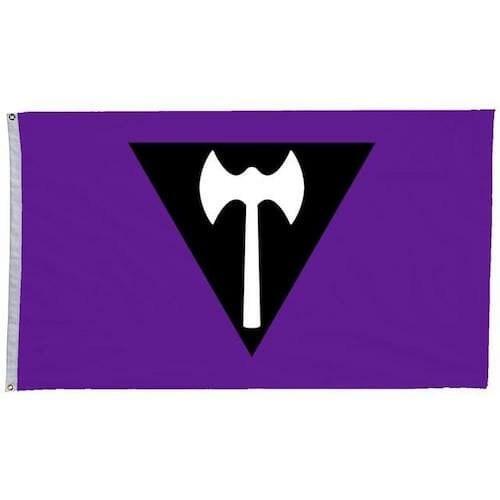
The labrys lesbian flag was designed in 1999 by graphic designer Sean Campbell, a cisgender gay homo, and distributed in June 2000 in the Palm Springs edition of the Gay and Lesbian Times Pride issue.
The blueprint includes a labrys, a double-headed ax, placed over an inverted blackness triangle, prepare confronting a violet background. Among its many meanings, the labrys was the weapon of choice for the Amazons of Greek mythology, a grouping of female warriors and hunters whose society was closed to men. It has been a symbol of empowerment used past lesbian feminists since the 1970s.
The inverted black triangle was the symbol worn by women considered asocial by the 3rd Reich (including homosexual females). They were condemned to concentration camps, similar to the pinkish triangle assigned to gay men. As gay men have reclaimed their symbol, many lesbians have also reclaimed this.
The symbol on the labrys lesbian flag has set up on the color violet, which has been associated with lesbians via the poesy of Sappho.
This flag is non widely used now, possibly because a lesbian did not create it – but besides because of concerns of its imagery rooted in the Holocaust. It is oft used by trans-exclusionary lesbians or trans-exclusionary feminists, partly due to the Amazon'south mythology where the women would either kill their sons or return them to their fathers, with whom they would only socialize briefly in gild to reproduce.
As such, many lesbians today seek out a flag that is inclusive of trans women and the wider LGBT community.
Lesbian Pride Flag
A lesbian is someone who experiences sexual or romantic attraction to other women or betwixt women. The term commonly applies to women; however, some nonbinary people also place with this term.
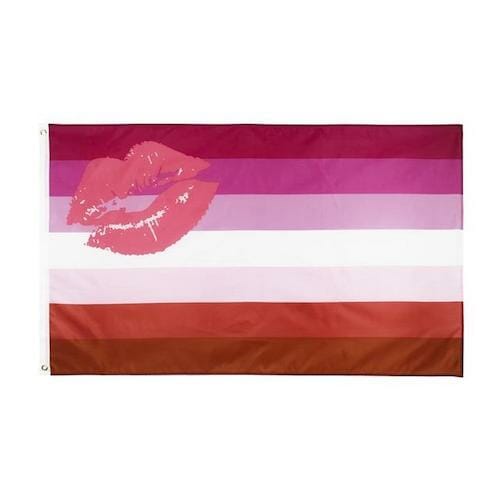
The original Labrys lesbian flag was created in 1999, but it bears no resemblance to the current flag iterations. The outset 'modern' lesbian flag was designed in 2010 – the lipstick lesbian flag, which had half dozen shades of pinkish and red stripes, ane white ane in the middle, and a cerise kiss printed on them.
This flag was so changed by removing the osculation and attracted more use as a full general lesbian pride flag. However, even this pink lesbian flag has been accused of not representing lesbians who do not align with femininity and is fifty-fifty viewed as offensive by some.
As a issue, in 2018, a different 'orangish-pink' lesbian pride flag was proposed every bit the new "lesbian flag for everyone" past Tumblr blogger Emily Gwen. The new flag has dissimilar colors which are said to stand up for (in society of elevation to bottom):
- Gender non-conformity.
- Independence.
- Community.
- Relationships unique to womanhood.
- Peace and tranquillity.
- Love and sex.
- Femininity.
Today in that location is no specific lesbian pride flag in use, and much like gay men, many lesbians prefer but to utilise the rainbow flag, which is representative of the queer community at big.
Lipstick Lesbian Pride Flag
A lipstick lesbian is a slang term for a lesbian who displays a greater corporeality of traditionally feminine gender attributes, such equally wearing make-upwards, dresses, or skirts, and having other characteristics associated with feminine women. As opposed to a butch lesbian, a lipstick lesbian a lesbian who prefers a glamorous, traditionally feminine manner.
Natalie McCray created the lipstick lesbian pride flag in 2010 to symbolize the lipstick lesbian sub-group. Nevertheless, this flag concept was defendant of plagiarism since information technology appeared disconcertingly comparable to the Cougar pride flag produced by Fausto Fernós in 2008.
McCray was besides criticized for advocating transphobic and exclusionary ideologies, and the majority of the community immediately abandoned her flag creation. Her flag's colors were not explained, and we recommend flying some other lesbian pride flag that is less problematic.
Maverique Pride Flag
Maverique is a nonbinary or abinary gender that has a significant gendered experience but is neither male nor female. Information technology is not a lack of gender. It is defined by autonomy and inner confidence nigh a notion of gender that is unusual, atypical, and exists independently of standard gender conceptions.
Maverique persons (like people of any gender) are free to apply whichever pronouns they like and to present themselves in any manner they desire.
Like many LGBTQ+ flags, the maverique pride flag was first created on Tumblr, past Vesper H. (queerascat), who also coined the term maverique a few days earlier. The following are the meanings of the colors:
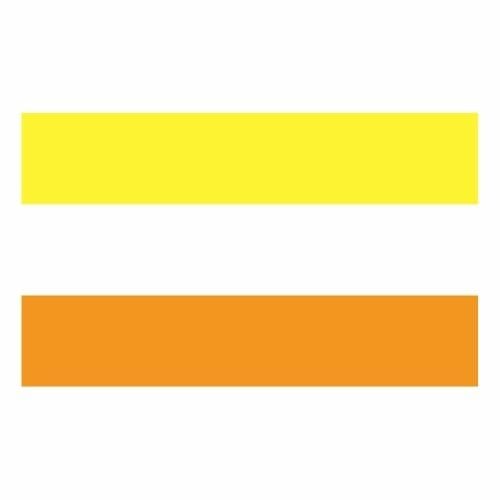
- Yellow, which denotes the agender, is the main color used, significant it is distinct from the other basic hues, but like maverique is distinct from masculinity and femininity. Non-binary gender is oftentimes related to the colour yellow.
- White signifies autonomy and independence from both the gender binary and the color spectrum. White is the gender-neutral sheet on which maverique is built.
- Orange symbolizes a peppery inner conviction equally well every bit their anarchistic and unique personality.
Neutrois Pride Flag
Neutrois is a gender identity that refers to gender neutrality, or neutral gender. Information technology is typically interpreted as indifference to gender or even its absence (nullity), as in agender.
The verbal distinction between terminology like agender and neutrois is a point of contention. Some people use these phrases interchangeably; notwithstanding, at that place is a distinction between them for others. One of the most commonly mentioned distinctions is that agender is the sense of having no gender at all, while neutrois is the feeling of having a gender identity that is neither male nor female but rather neutral.
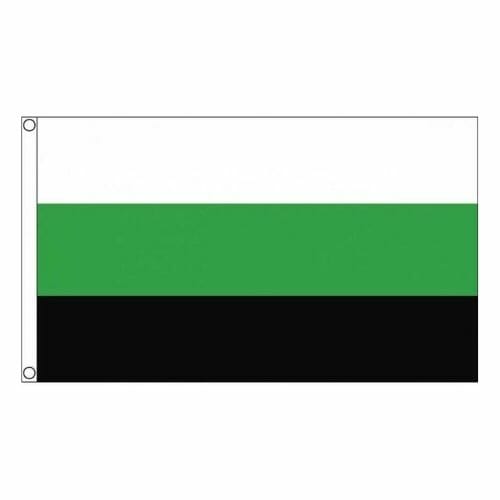
The colors of the neutrois pride flag accept the post-obit meanings:
- White denotes beingness gender-neutral, unidentified, or undecided.
- Dark chartreuse green is the reverse of lavender, a alloy of pink and blueish, indicating that it is neither female nor male person.
- Blackness is associated with being agender or genderless.
Not-Binary Pride Flag
While the term "nonbinary" or "enby" can mean unlike things to dissimilar people, it is typically used to describe someone whose gender identity isn't exclusively male or female.
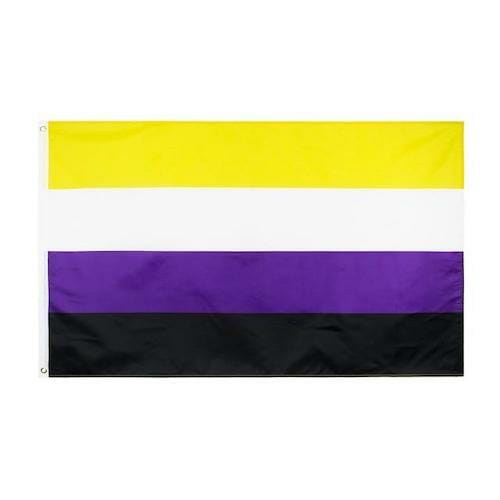
Kye Rowan created the Non-Binary Pride Flag in 2014 to be flown alongside the genderqueer flag – non to supervene upon it. The flag has yellow, white, majestic, and black horizontal stripes. This flag represents non-binary people who don't feel represented by the genderqueer flag.
Taken together, these 4 colors of the flag aim to include and specifically depict the feel of non-binary people. Non-binary people worldwide take embraced Rowan's blueprint, and today you can see the flag being carried at Pride parades around the world. The iv colors of the not-binary flag stand for:
- Yellow stands for people whose gender doesn't be within the binary.
- White represents people with all genders or many genders.
- Imperial stands for people with genders that may exist a mix of female and male.
- Black represents people that identify as not having any gender at all.
Omnisexual Pride Flag
An omnisexual is a person who has romantic, sexual, or affectional desires for people of all genders and sexes. This is similar to pansexuality; however, there are differences between these ii terms. Omnisexual people are not gender blind, and they see and admit gender. Omnisexual people are sexually attracted to different genders and sexual orientations, but unlike pansexuality, the gender of the people they are attracted to matters to some caste.
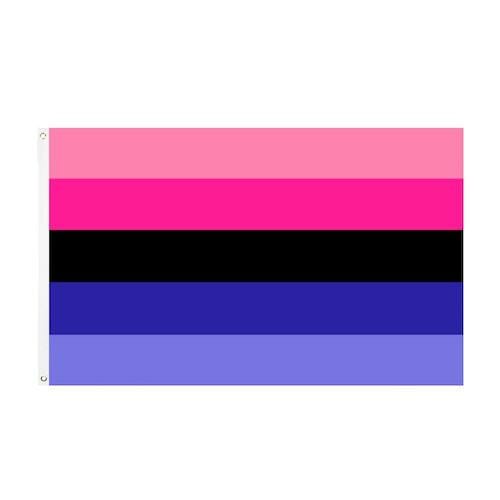
Like most queer identities, omnisexuals have an exclusive LGBTQ+ flag that they fly which includes shades of pink, majestic, and blue. The omnisexual pride flag was created by @pastelmemer in 2015; however, they never explained the exact significant of the colors.
That has not stopped many omnisexual individuals from putting their feelings to each colour, and the current semi-consensus to what these colors mean is:
- Pink stands for attraction to women.
- Bluish stands for attraction to men.
- Purple stands for allure to non-binary people.
Original Gilbert Baker Rainbow Pride Flag
On June 25th, 1978, the first gay pride flags were flown at the San Francisco Gay Freedom Day Parade. Until this bespeak, the pink triangle had been used equally a symbol for the LGBT community – despite its relation to an exceptionally dark chapter in the history of homosexuality.
The flag was created past Gilbert Baker—an activist, drag queen, and artist—who described his rainbow-striped blueprint as "something beautiful, something from usa… it really fits our diversity in terms of race, gender, ages, all of those things."
The same day during the parade, ii pride banners replaced the United States and United Nations flags hoisted at the Un Plaza in San Fran, and the world saw the outset LGBQ+ flags.
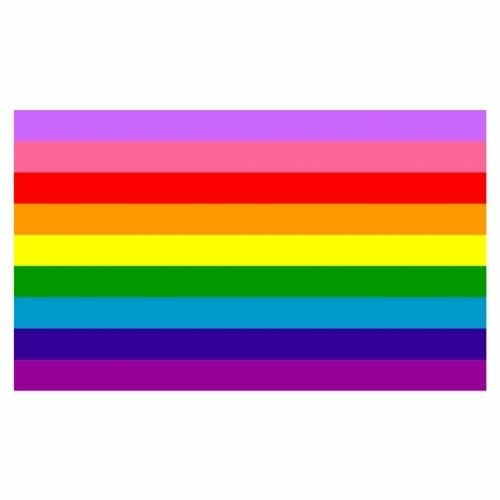
The different colors of this flag were often associated with "diverseness" in the gay customs (but actually take literal meanings), including:
- Red for life.
- Orange for healing.
- Yellow for sunlight.
- Green for nature.
- Bluish for harmony/peace.
- Majestic for spirit.
- Pinkish for sexuality.
- Turquoise for art/magic.
Pink and turquoise were removed for production purposes, and the half dozen-ring variant, now just known as the "Gay pride" flag, has been the virtually well-recognized symbol of the LGBT move since 1979. It has been congenital on for them at various times, including with the improver of blackness-and-brown for people of color in 2017 for the Philadelphia Pride Flag, and white-pink-blue for transgender and queer people in 2018 for the Pride Progress flag.
The original LGBTQ+ flag, a segment of the original Gilbert Baker rainbow flag, was recently rediscovered and donated to San Fransisco'due south GLBT Historical Social club Museum and Archives.
Pangender Pride Flag
Pangender is someone who feels comfortable with unlike kinds of gender labels and whose gender identity is non limited to one gender and may encompass all genders at once. It comes with an understanding that the vast and diverse multiplicity of genders inside the same individual can extend infinitely, always within the person's own culture and life experience, and may or may non include unknown genders.
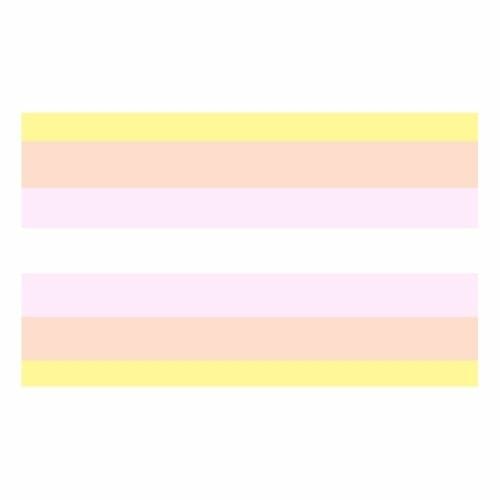
Cari Rez Lobo get-go proposed the Pangender Pride flag in 2015 on Tumblr. The suggested pride flags for the Pangender Spectrum are based on the agender pride flag. The colors are extremely vibrant (like the brightness has been turned up) to symbolize the diversity of genders as white light, in the electromagnetic spectrum, is a combination of all colors.
The other color of the pangender pride flag also have pregnant:
- Yellowish is for all genders that aren't connected to female and male and are represented past the yellow colour.
- Light red color denotes the transition betwixt the genders of female person and male.
- Light violet-pink represents female person and male person.
- White symbolizes the union of all of these genders.
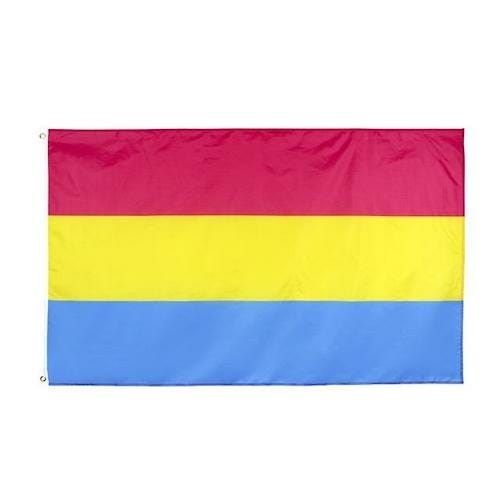
Pansexual Pride Flag
A pansexual is non limited in sexual choice apropos biological sexual practice, gender, or gender identity. They will ofttimes refer to themselves every bit gender-bullheaded, explaining that gender and sex activity do not determine their romantic or sexual attraction to others.
The pansexual pride flag was created past an online pansexual customs in 2010. It represents the differences between pansexual and bisexual identities since there is common confusion betwixt these communities.
The pansexual flag has three distinct stripes. The elevation one is salmon pink, the next ane is canary yellow, and the bottom i is bright blueish. These 3 colors represent the different gender groups that pansexual individuals may be attracted to and then:
- Pink represents those who identify as female.
- Blue represents tools that identify as male person.
- Yellow represents individuals that identify anywhere in the gender spectrum or across.
Philadelphia Pride Flag
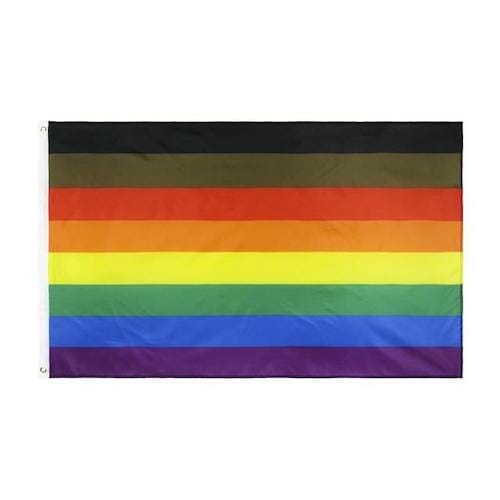
The urban center of Philadelphia approved a redesigned version of the flag created by the marketing bureau Tierney in June 2017, which adds black and brown stripes to the top of the traditional six-color flag to call attending to concerns affecting LGBT people of color. It was introduced equally part of a citywide "More Color More Pride" campaign — and was borne of protestation subsequently several loftier-profile stories exposing racism in Philly's Gayborhood.
It was rapidly adopted around the world and gave representation to black and brown people in the LGBTQ community and their experiences. It is still frequently used; withal, it has been built upon to be more than inclusive of the transgender customs just a few years later with the Pride Progress Flag.
Polyamory Pride Flag
A polyamorous person desires or engages in multiple romantic (and typically sexual) relationships with the consent of all the people involved.
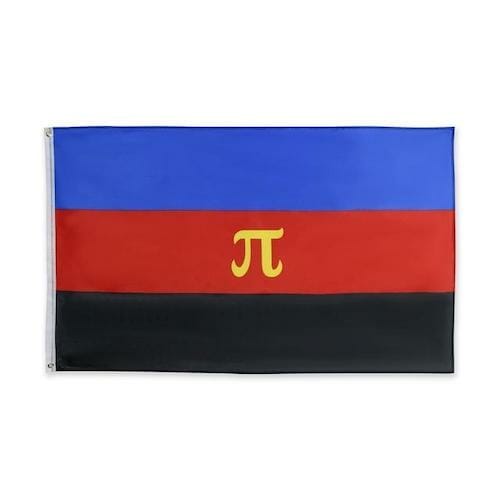
Jim Evans created the original polyamory pride flag in 1995. The flag has bluish, red, and blackness bars with the Greek letter pi symbol in the centre. The blue bar represents honesty and openness among partners, while the ruddy bar represents love and affection.
The blackness bar represents solidarity with all people that have to hide their multi-lover partnerships from the rest of the world. There are many explanations for the pi symbol in the middle of the flag. However, the one that makes the most sense and is agreed upon but most people is that information technology stands for infinite love amidst partners.
Much like other LGBTQ+ flags, at that place take been many variations of the polyamorous flag afterwards diverse community members decided that the original flag was undesirable. Some of the variations include the removal of the pi symbol and replacing it with an infinity eye symbol. The infinite heart symbol has been a recurring aspect of variations of the polyamorous flag – but this original flag is still the almost agreed upon and usually seen.
Polysexual Pride Flag
A polysexual person is someone who is sexually and/or romantically attracted to multiple genders. Sometimes, polysexuality is likened to other multi-sexual identities. One of the main differences betwixt pansexual and omnisexual is that people who identify with these terms are attracted to all genders. On the other paw, a polysexual may not necessarily be attracted to all genders but may be attracted to many genders.
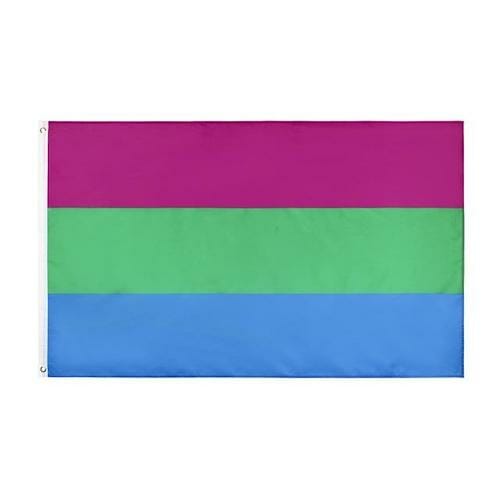
The polysexual pride flag has pink, green, and blueish stripes. Pink represents an attraction to women, green represents an attraction to non-binary people, and blue represents an attraction to men. The polysexual flag was created by Tumblr user Tomlin in 2012. The user created the flag after noting that polysexuals did not have a flag to represent them. He fabricated the flag similar to pan and bi flags since all these identities are under the multisexual umbrella.
An anonymous wiki user designed an alternative poly flag on October 21st, 2020. This new design is meant to exist easier on the eyes while maintaining the same pregnant. This flag still has the original stripe colors with their meaning, and the additional lighter pink and blue stripes stand for poly individuals. The light green nearly white stripes stand for peace, poly, and transgender individuals.
For at present, the original polysexual pride flag is the about ofttimes seen, but in the future, this could evolve. Remember that many LGBTQ+ pride flags have multiple versions in use simultaneously. It doesn't make them less valid.
Puppy Pride Flag
Puppy (or pup) play is a type of role-play behavior in which developed humans adopt the characteristics of dogs (puppies, in particular) and is popular in the gay leather customs. Information technology is, however, non an exclusively gay kink, and can be considered under the wider BDSM umbrella.
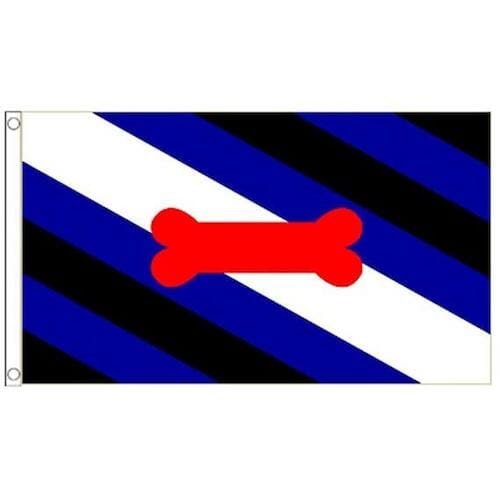
The puppy pride flag denotes a fellow member of the Pet Play community. It's a quasi-derivative of the leather flag, but with a ruddy os in the center and an angle. The white stripe is somewhat larger to reflect the customs'south variety, while the bone represents the puppy's loving, nonjudgmental center.
There are diverse other Pup Pride Flags, including those with a Doberman instead of the os, only this is the most widely used now.
Queer Pride Flag
Queer is an identity in and of itself that more and more people are choosing to identify with. Information technology is a sort of characterization for those who don't want to put themselves in a box. Often considered a movement, queer people are those who fall outside of and/or renounce the cultural norms effectually sexuality, gender identity, and/or gender expression.
The word queer can mean dissimilar things to different people, merely the most accustomed definition is someone who is not cishet or someone with variant experiences with orientation, gender, and/or sex.
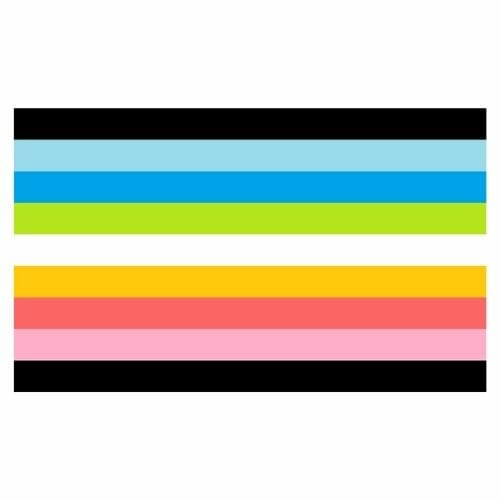
One of the first flags created explicitly equally the "queer flag" was designed by Pastelmemer in 2015. There are not many alternative flags but this all the same the most popular. On this flag:
- The shades of pinkish next to each other and shades of blue next to each other symbolize same-gender attraction.
- The orangish and green are for non-binary individuals.
- Blackness and white are for asexual, aromantic, and agender spectrum individuals.
Questioning Pride Flag
Questioning is the human activity of figuring out what 1'southward gender, sexual orientation, romantic orientation, or any aspect of one's identity is past investigating, educating, or exploring with it.
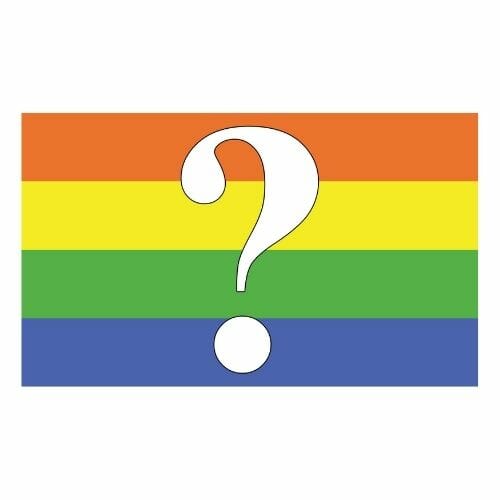
There are many questioning pride flags, merely most have some form of question mark incorporated into the design. The version created by Swocks, the owner of a large LGBTQ+ Hangout community, was first used on August 18th, 2020, and is now the virtually ofttimes seen with a pastel flag with the white question marking over information technology represents questioning pride.
Rubber Pride Flag
Similar many other kink communities, the rubber/latex fetish customs members have a flag to limited their preferences and passion. While popular with gay men and ofttimes seen at pride parades, condom pride is not sectional to any gender or sexuality.
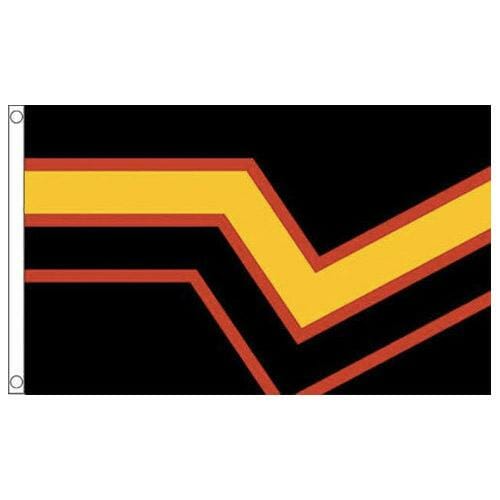
It was created by Peter Tolos and Scott in 1995, who have said that:
- Black represents the lust for the look and feel of shiny black rubber.
- Carmine represents the blood passion for safety and rubbermen.
- Yellow represents the drive for intense rubber play and fantasies.
Oh, and there is likewise a literal kink in the pattern of the rubber pride flag, which totally makes sense!
Directly Ally Pride Flag
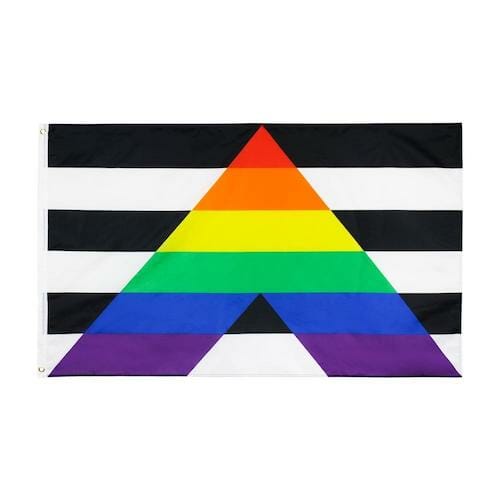
A direct marry is a cisgender or heterosexual person who recognizes the discrimination faced past the LGBTQ community due to their gender identity, expression, or sexual orientation. They are not themselves part of the queer rainbow family unit but support LGBTQ+ causes and fight for a more inclusive world.
Sadly, information technology isn't known who made or designed the straight marry flag. However, what is known about it is that it was kickoff used in the 2000s. The straight ally flag was created by combining the LGBTQ pride flag and the straight flag.
The straight ally flag doesn't have the original LGBTQ pride flag colors made by Baker. This flag only uses the more modernistic half-dozen-colored flag without pink and turquoise. The direct ally flag represents unity and back up towards the LGBTQ community.
Here's what the straight marry flag means:
- The letter 'A' ways ally.
- The black and white stripes correspond the straight flag.
- The rainbow colors in the letter 'A' are for the LGBT community.
Go along in listen that bearing this flag is not a trend. It comes with an understanding of the challenges that LGBTQ people face and knowing that you're responsible for doing something about them.
In add-on, just because there's a straight marry flag doesn't mean that brandishing the flag is a requirement for supporting the LGBTQ community. As a true ally, you will requite your back up in many different means.
Transgender Pride Flag
A transgender person is someone whose gender identity is dissimilar from the gender they were thought to exist at birth.
Monica Helms, a transgender woman, and navy veteran, created the transgender flag in 1999. She said that the idea for the transgender flag came to her early 1 morning.
"When y'all wake up, and you're still sort of groggy and everything but you're starting to call back, and your mind is starting to fill with images — that'south when it came to me," she said – every much a example of "divine intervention."
She brought the beginning transgender flag to the 2000 Phoenix Pride Parade. The Smithsonian'due south National Museum of American History in Washington DC later caused the flag in 2014.
When Monica brought the flag to the pride parade in Phoenix, many people were interested in her design. People saw it, liked it, and also thought that she had excellent reasons for the colors. After that, the flag took off.
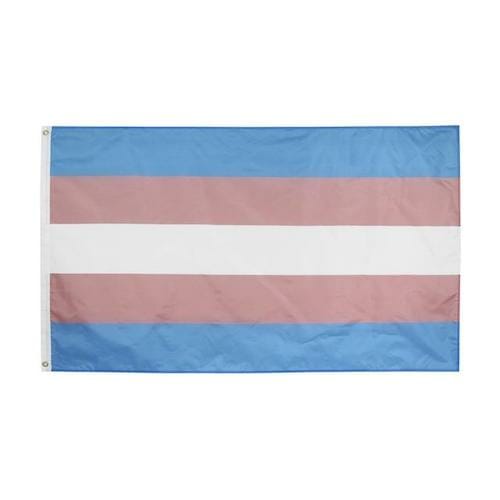
The transgender flag has light bluish, pink, and white stripes. Co-ordinate to Monica, here's what the colors hateful:
- Light blue represents boys.
- Pinkish represents girls.
- The middle white colour is for those who are transitioning, intersex people, and those who feel they have no gender or take a neutral gender similar non-binary, genderqueer or genderfluid individuals.
"The pattern is such that no matter which way you fly it, it is e'er correct, signifying the states finding correctness in our lives," Monica said.
Trigender Pride Flag
Trigender is a gender identity in which a person switches between or among several genders, including a tertiary gender (genderless, a mix of masculine and feminine, or any other multifariousness of genderqueer identities). Dependent on the individual's mood or environment, a trigender individual may change from ane gender to another.
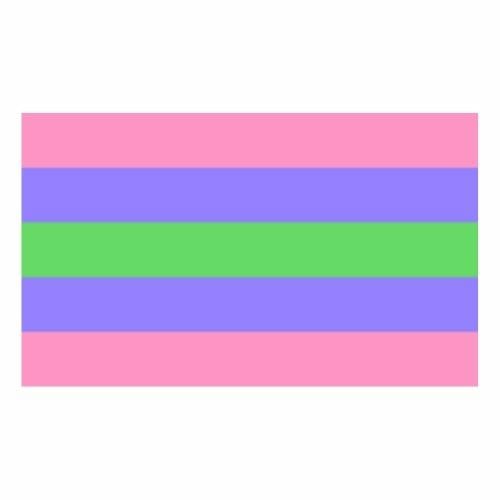
An unknown person developed the trigender flag, and the first known use was on July 4th, 2015. The trigender pride flag has five stripes and three colors which represent:
- Pink signifies femininity and female genders.
- Blue signifies masculinity and male genders.
- Dark-green signifies androgyny and third/other genders.
Twink Pride Flag
Twinks are a subset of gay males that challenge traditional masculinity past adopting gendered and feminine characteristics. Concrete appearance, preferences, display of traditionally gendered characteristics, and personal connection may all be used to draw twinks.
A twink is ofttimes shown as a skinny guy with no facial pilus and often no body pilus, who may or may not dress in non-traditionally masculine ways.
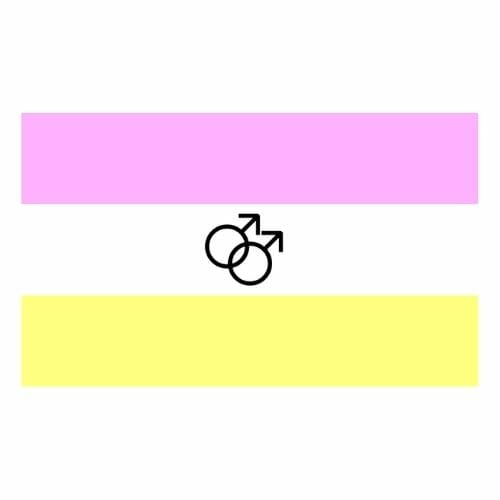
The 3 equal-width stripes on the twink pride flag are pale pink at the top and stake yellow at the lesser. The interwoven pair of Mars symbols on the center white stripe is widely used to signify homosexual males. These colors were adopted for their "soft" await, with pinkish representing femininity and yellow representing independence.
2-Spirit Pride Flag
Two-Spirit, besides known as Two-Spirited, is an Ethnic North American identity that encompasses sexuality, gender, and/or spirituality. Two-Spirit is a broad concept that embraces homosexual/homoromantic affinity also as a wide range of gender diversity, including those who are gay, lesbian, bi, trans, genderqueer, GNC, or take multiple gender identities in Western society.
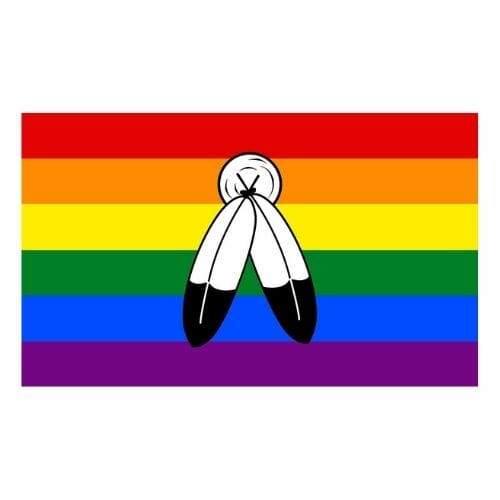
There is no one agreed-upon two-spirit flag; however, tumbler user 2Sanon developed the almost commonly seen two-spirit flag. They submitted it to enquire-pride-color-schemes on December 17th, 2016. The circumvolve denotes oneness in one, while the ii feathers signify adult female and man. It's usually put over the LGBT rainbow flag, merely it may besides be draped over a transgender or nonbinary flag.
Other Pop LGBTQ Flags
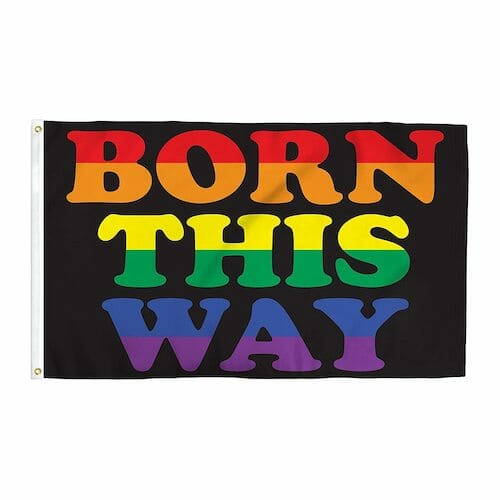
Born This Way Pride Flag
If you were 'Born This Fashion,' in the emotive words of the fantastically extravagant Lady GaGa, then this flag is for you!
Equal Man Rights Pride Flag
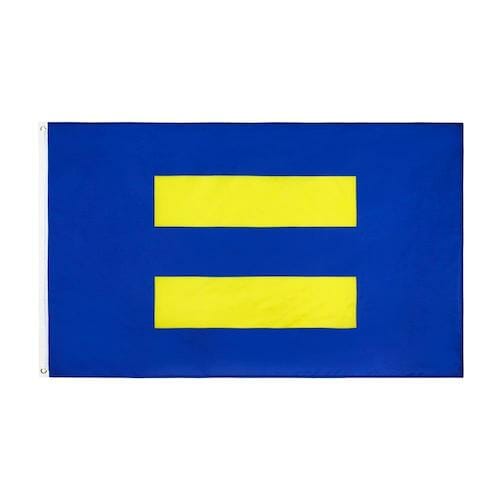
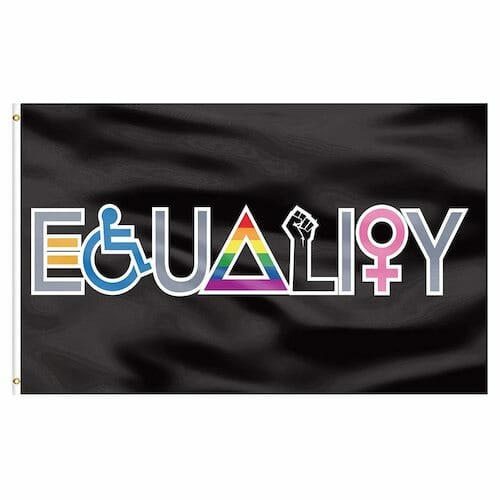
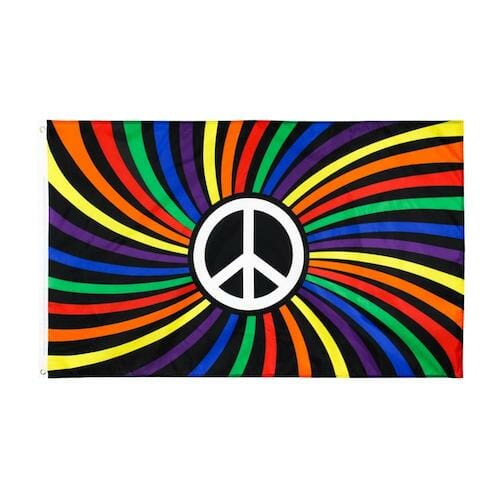
Proudly bear witness your back up for LGBTQ+ equality with this Equality Flag, featuring the Human Rights Campaigns' iconic equal sign logo in blue and yellowish.
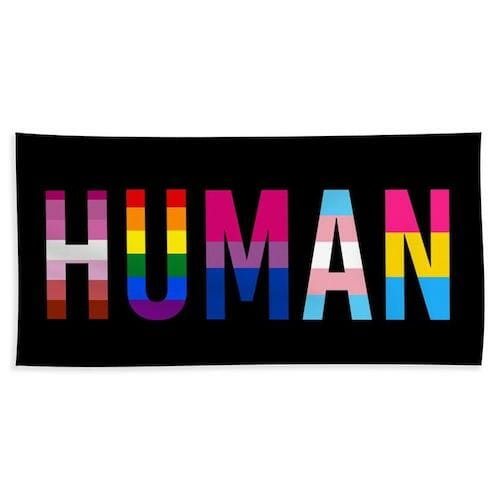
HUMAN LGBT Pride Flag
A pop queer flag that has Homo spelled out with other LGBTQ flag colors behind the letters.
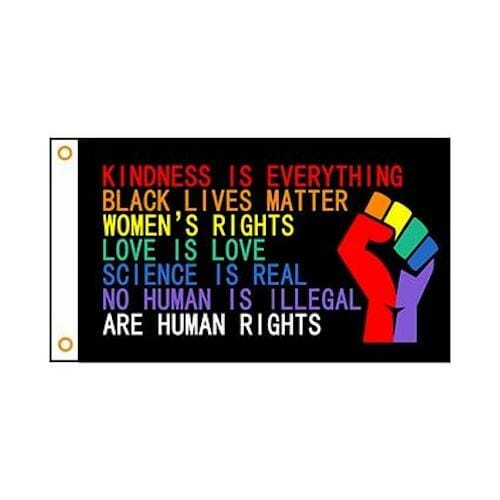
Kindness Is Everything Pride Flag
An LGBTQ flag that proclaims kindness is everything. Blackness Lives Matter. Women's rights. Dearest is Love. Science Is Real. No Human Is Illegal. Are Man Rights. Plenty said actually.
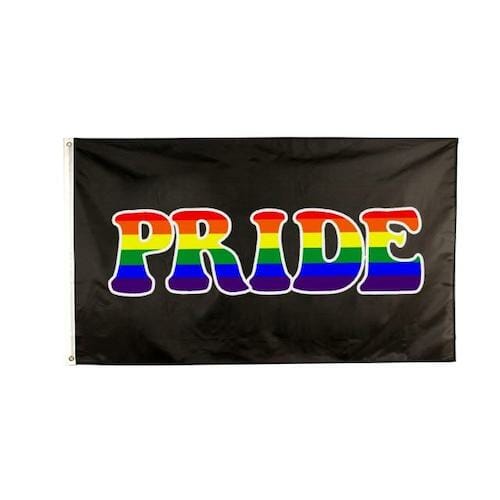
LGBT Pride Flag
An LGBTQ flag that proclaims pride with the iconic rainbow colors showing on a black background.
U.s.a. Gay Pride Flag
The standard 6 stripe rainbow LGBT flag crossed with the American flag.

Source: https://queerintheworld.com/different-lgbtq-flags-and-meaning/
0 Response to "Gay Pride Flag Make America Gay Again Flag"
Postar um comentário